AMERICAN LANGUAGE SHOW NOTES:
TV OR NOT TV
© Alan Reade, 1992 and 2020
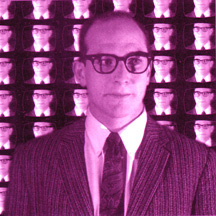
Tugs Belmont Nightclub, Seattle, Washington, weekly from October 12 to November 2, 1992
911 Media Arts Center, Seattle, Washington, January 29 and 30, 1993
Parts of this performance were premiered in the show A Boy and His Toys, Pyramid Club, New York, New York, September 1990.
Performers and Participants
Alan Reade--Vocals, Keyboard, Sampling Keyboard
Tom Larsen--Fretless Bass
Slugg Jello--Cello
Mary Stewart--Harp, Vocals
Kelly Brown--Percussion
Corey Hoyt--Sound Production
Robert Russell--Video Production
John Silverio--Still Photographs of Performance
Notes
Right after the Gulf War, I fell into an "art depression." I just could not believe how many around me had come out of the closet as a jingo-ist, talking about how just and great America was for blowing all those people away in the Middle East. Maybe I felt it worse because I worked as an editor in aerospace at the time, so I heard all this pro-war rhetoric on the job. I stopped doing performances for a while--except for one where I dressed in a black sheet as a blob of crude oil and ranted against the war in some bookstore. Yeah, whatever. Otherwise, I just stayed home a lot when I didn't have to work.
On Easter Sunday, 1992, I went to a performance that changed my life: Diamanda Galás. Her rage, and the sheer volume of her processed and amplified voice, brought tears to my eyes and a new yen to perform to my spirit. At this performance, one of the bartenders handed me a flier for a show she was producing at the Seattle gay nightclub Tugs Belmont--a night of video performance art to benefit AIDS activist group ACT UP.
A day later, I was on the phone with the bartender, asking whether I could be part of it. I had planned to debut a performance of a piece I'd written in 1989, "Barbie and the Big Hole," but this time with video. Tugs had a stack of video monitors in crucifix form, so it gave whatever video was playing an interesting patterned background. I started working with video producer Robert Russell to give "Barbie" a visual tableau. I also came up with a piece where I interviewed myself on video to "test" whether I was queer enough to be part of the gay community.
On May 5, 1992, Tom Larsen (on bass) showed up with me and we brought the house down. We were the only live act, as the producer had planned on only screening videos by Sandra Bernhard, Karen Finley, and others. Everyone loved "Barbie," which I performed with dolls and a dildo in addition to the video and bass accompaniment. I think very few in the crowd suspected that the piece was borne out of anger at the body-centric gay culture I saw all around me, with Barbie representing how I saw most gay guys at the time.
Bruce Porter, the owner of Tugs, got in touch with me and asked me to do a full-length show. I snapped out of my depression! It would be a video-based piece, and, I decided, would be the second part of American Language. This performance would incorporate elements of the vowel sound "E," as I'd previously planned in laying out the entire American Language series, but what would the subject matter include?
For me, the letter E connoted eternity, relationships; the letter itself pointed with three fingers to the right--when thinking through the sounds I thought of trains, lines, monotones, and that was reflected in using more droning synthesizer lines and cello sounds. The tarot-card suit for this motif was Swords: thought, communication, media. I had written some pieces about how the Gulf War had galvanized many people who really seemed to miss not having a war happening. Watching war footage in groups seemed to be the equivalent of tuning in to a soap opera or miniseries daily. "I know!" I said, "I'll make the show about the hypnotizing effects of television!"
Again, I put together a band--the songs this time around would have more synthesizer and no guitar, as I wanted a dreamier, smoother sound. There would be Tom on bass, a guy named Slugg Jello on cello, and Kelly Brown on percussion (as full-on 4/4-time drums were provided by the synth). My neighbor Mary Stewart joined the cast to be the "Queen of Satellites" for one piece and play the harp. I marketed the performance as "Video Vaudeville," and I included some schtick-y pieces in addition to the more serious stuff, particularly a cast of video puppets who bantered with me throughout the show. I felt those parts in particular were a little contrived, so I did not include any "puppet banter" here, only pictures.
The show premiered on October 12, 1992. The gay press loved it. The mainstream press hated it. We played once a week for a month, to medium crowds. The owner of Tugs, Bruce, didn't understand the show, as it had become less and less of an outright "gay" show in production. No matter. The following January, I brought the performance to 911 Media Arts Center for a weekend (with only Slugg on cello and the rest of the musical parts on synthesizer), which had a huge screen for video projections.
Looking back from the vantage point of many years I can see that my commentaries on Madonna and Barbie were based entirely in a certain era; Madonna and Barbie are still here and have evolved both because of and maybe in spite of cultural criticisms aimed at them. I also look at the content of this performance and other pieces in American Language and wonder about all the energy we put into fighting for rights and trying to solve social injustices in the 1990s; I'm not alone in marveling that things change both so much and so little in the space of decades.
The performance was not without its share of technical problems, although it went much more smoothly than The Alphabet of Savages had gone. This was the first show I'd done that had a month-long run. It was also, I vowed, the last show I would sing my way through! By the end of the run, I realized that I really needed voice lessons if I ever wanted to try that again. Fortunately, the (lack of) strength of my singing voice has no bearing on the printed page.
Close this window to return to American Language.